FR
FR  DE
DE 
What’s a Turn Radius
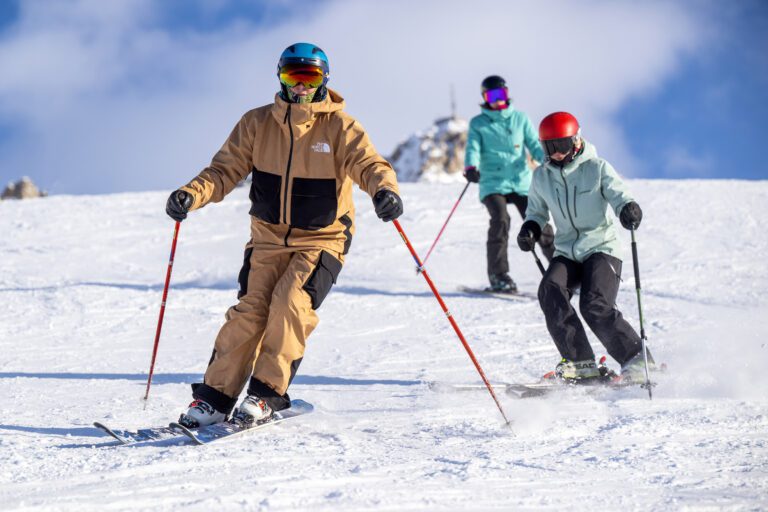
A turn radius is the length of the arc that the skis make on the snow when turning. Long turns would draw a large semicircle – usually 15 to 25 meters long. A short turn will be about half of this.
When being assessed on your BASI Level 2 short turns, you’ll be required to increase or decrease the size of your turns. When you’re asked to do this, ensure that you both widen and elongate your turns to keep them round.
So what’s a short turn?
There is no exact measurement that clearly defines a short turn. Short turns can vary in length and width.
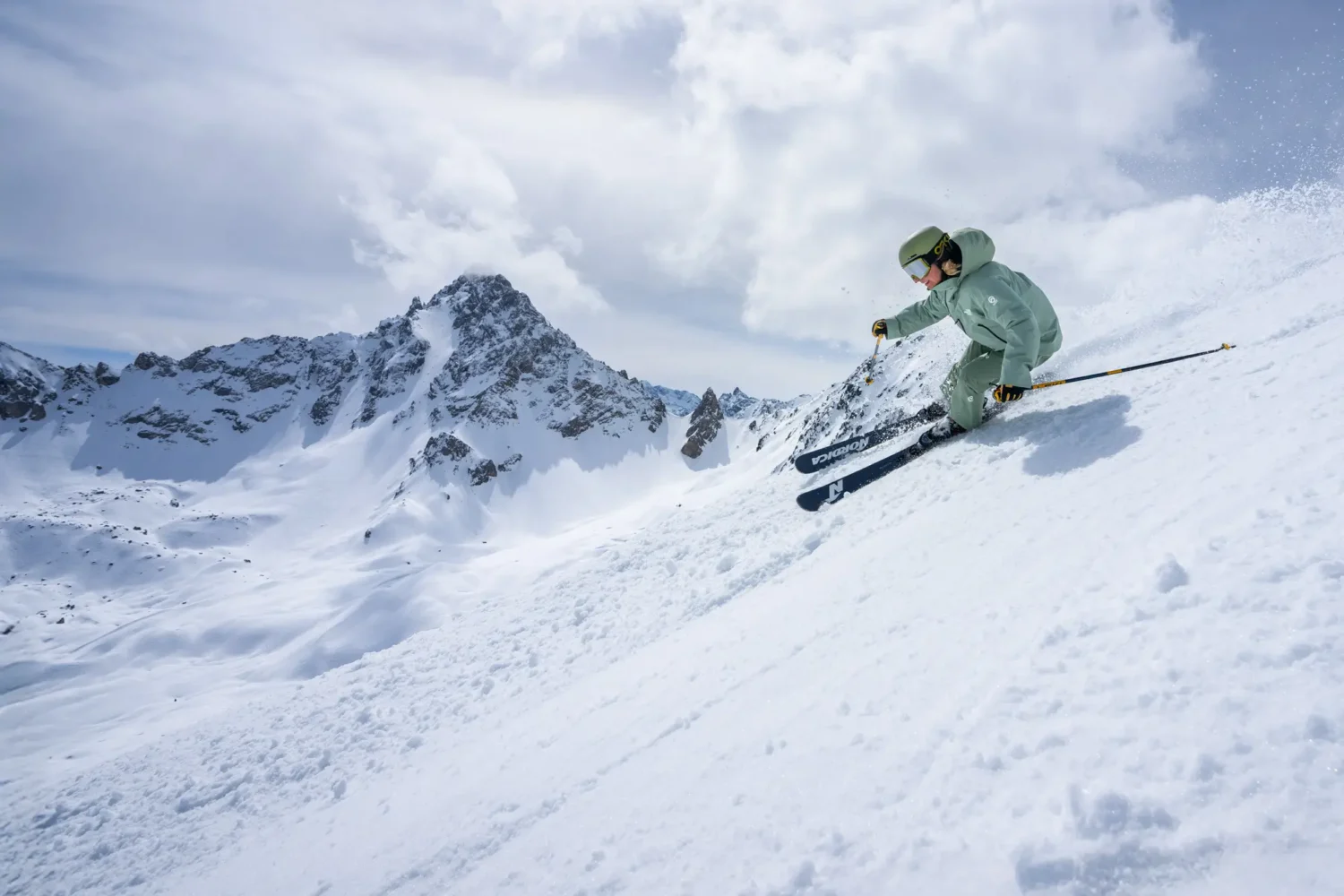
However, there are characteristics that short turns all have to distinguish them from long turns. These include the use of a pole plant, greater rotational separation, and greater rotation of the skis compared to long turns.
BASI Level 2 short turns are usually used on steeper slopes due to the smaller turn size and greater amount of skidding. This really helps when you’re trying to keep your speed under control.
What do examiners look for in Short Turns?
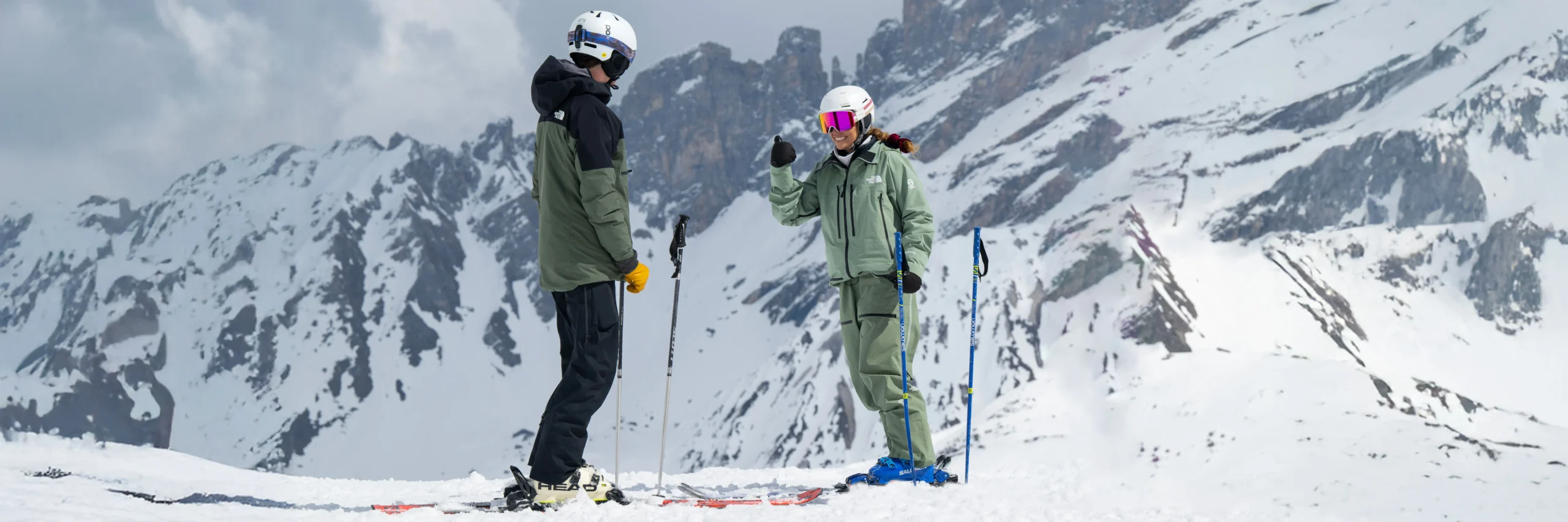
During an exam, your tainer will evaluate your BASI Level 2 short turns against the following criteria.
Exam criteria for BASI Level 2 short turns
- Perform turns which are round, symmetrical and grip from the fall line. You should perform these turns in various corridors on a blue or easy red piste.
- Show the ability to maintain a constant speed.
- Use effective posture, balance and movements.
The main difference between a BASI Level 1 and BASI Level 2 short turns is that BASI Level 2 short turns require greater levels of performance.
This doesn’t mean skiing them faster, but rather looking to increase early grip, edge angle, and bending your skis more throughout the turn.
Drills to improve BASI Level 2 short turns
Input focused drills: Posture, balance and movements.
Braquage – Braquage is an excellent drill for working on your range of rotational separation. Find a well-groomed blue slope to perform this drill on.
The aim of braquage is to continue moving directly down the fall line. While doing so, rotate your skis so that your ski tips point from the left of the piste, then to the right and back. As your skis move under you, you should aim to keep your upper body facing directly down the fall line.
Keep your skis as flat as possible and try to keep your skis constantly moving. You should feel a twisting at your waist as you go through the movement. You’ll need help visualising the correct movement. Hold your poles in front of you, upwards. Find something downslope that you can see and keep it in view between your poles as you go through the drill.
Cross unders – Cross unders are great for improving your lateral separation. To ski cross-unders, look for a blue piste that is fairly well-groomed.
Keep your body position low and try to extend your skis outwards to the left and to the right. It can be easy to add too much weight onto your inside ski and fall whilst doing this, so be wary. After practising this, you should begin to feel as though the skis are building a large edge angle. This will result in the skis pinging under you as you release the turn.
When the skis are furthest from your body, you’ll begin to feel a pinch at your hips. This is a key feeling to look for when skiing short turns outside of the drill.
For an added challenge, keep your poles extended out to the side of you. Whilst doing so, keep the tips of the poles on the ground. This will stop you from making any upward extensions.
It may help not to rotate your skis too much during this drill. Instead, focus entirely on your pressure management and ski edge angle.
If you slow down the speed of your transition, you can begin to feel how these inputs would act if you were asked to ski a wider corridor, such as a short turn.
Output-focused tactical tips for BASI Level 2 short turns
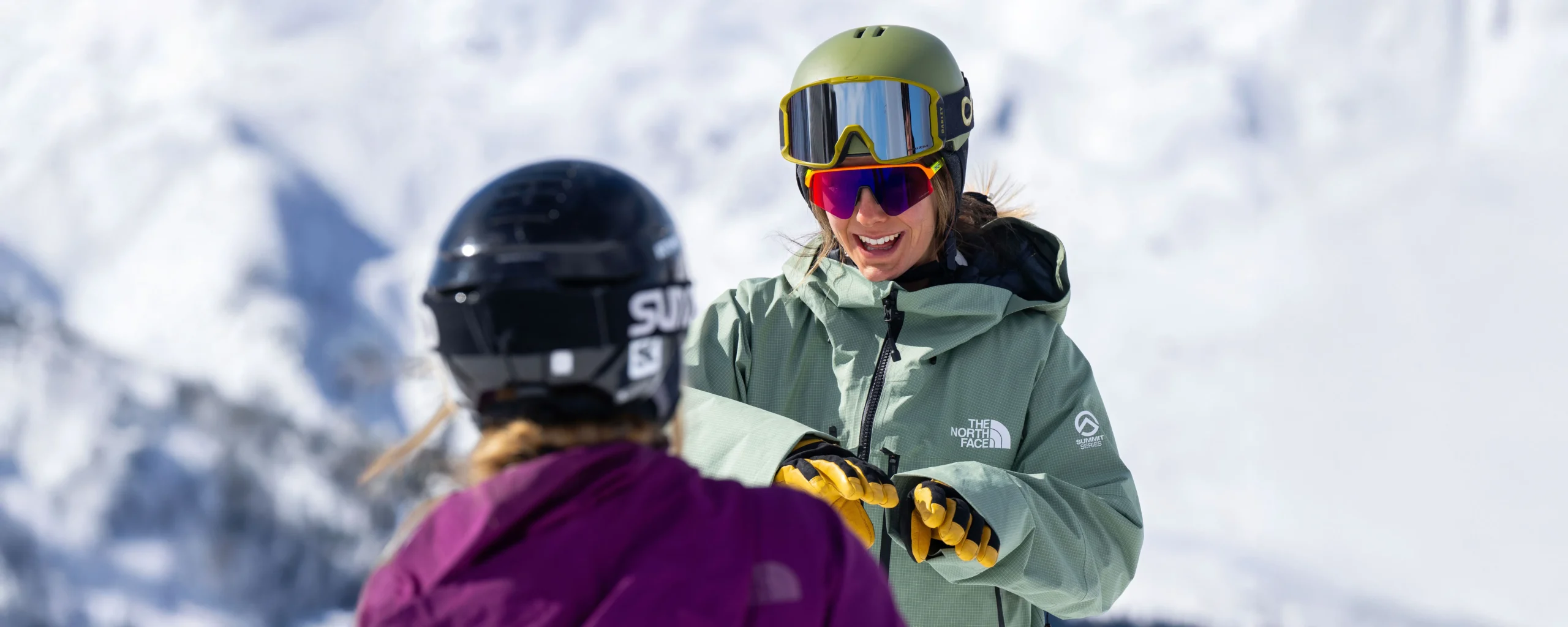
Turn shape, turn size, grip and speed.
Speed Control – Having good speed control is one of the outputs that the examiner will look for in your BASI Level 2 short turns. Speeding up or slowing down throughout your run will be symptomatic of failings within your short turn technique. That being said, there are tactical changes that can help.
When you set off, try to reach the speed you want to maintain. Let your skis run down the hill for the first 5 to 10 meters. This will allow you to build speed easily, rather than having to build it as you work through your short turns.
Another important part of speed control is having a smooth application of pressure, rotation and edge angle through the turn. Dumping too much of any input at one point of the turn will cause the ski to speed up or slow down erratically. This will also stop you from having round turns.
Turn Symmetry – Having symmetrical turns is another part of the criteria that you’ll be marked against. Poor symmetry also highlights any technical mistakes that you’ve made. When your left and right turns look different, the BASI trainer will look for the root cause. Excellent symmetry can help to mask this. To improve your symmetry, a strong pole plant is key.
Pole plants help initiate your turn and establish rhythm. This rhythm can then create the timing required for symmetrical turns. A key part of BASI Level 2 short turns.
How to get to the BASI Level 2 standard

The best way to get to the standard of BASI Level 2 short turns is through a training course. These courses offer an intensive way to make significant developments in a short period of time. Our trainers have been helping trainee instructors reach the required level for over 20 years. Explore our BASI Level 2 courses to discover how we can help you reach this level.