FR
FR  DE
DE 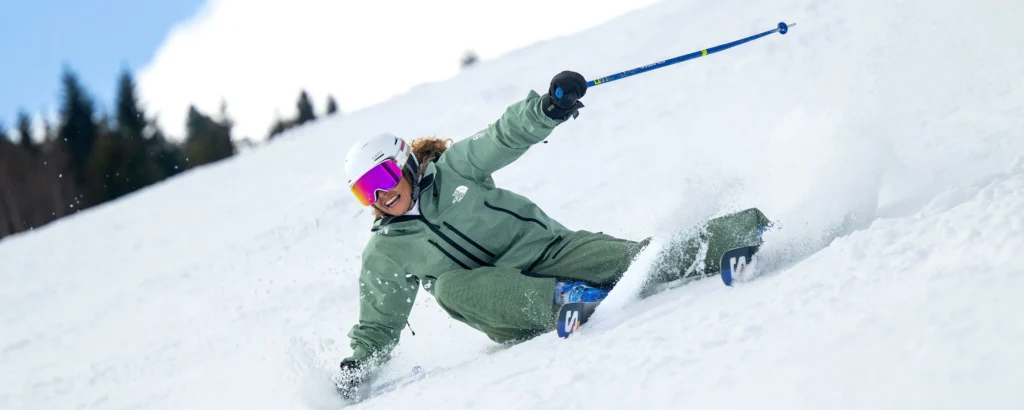
BASI Level 2 long turns are a key part of your instructor assessment.
What is a Turn Radius
The turn radius is the length of the arc that the skis make on the snow when turning. Long turns draw a large semicircle, which is usually 15 to 30 meters long.
For your BASI Level 2 long turns, you’ll be required to increase or decrease the size of your turns. When you’re asked to do this, ensure that you both widen and elongate your turns to keep them round.
What are long turns?
Long turns are turns with a larger radius. This can look like the skis running entirely along their edges for the whole length of the turn.
There isn’t an exact size which makes a turn a long turn. The exact size will differ largely, dependent on the turn radius of your skis.
Edge and pressure are the most important steering elements for BASI Level 2 long turns. The rotation is far less important, and excess rotation should be avoided. This is unless a stivot is required to change direction or reduce ski speed quickly. Try not to use the stivot during your BASI Level 2 long turns. It is, however, a useful skill to have when skiing long turns.
You’ll also use a more limited range of rotational separation compared to short turns.
BASI Level 2 long turns are done on slightly shallower pistes than short turns. This is due to the larger turn size and greater speed. This really helps when you’re trying to keep your speed under control.
What do examiners look for in long turns?
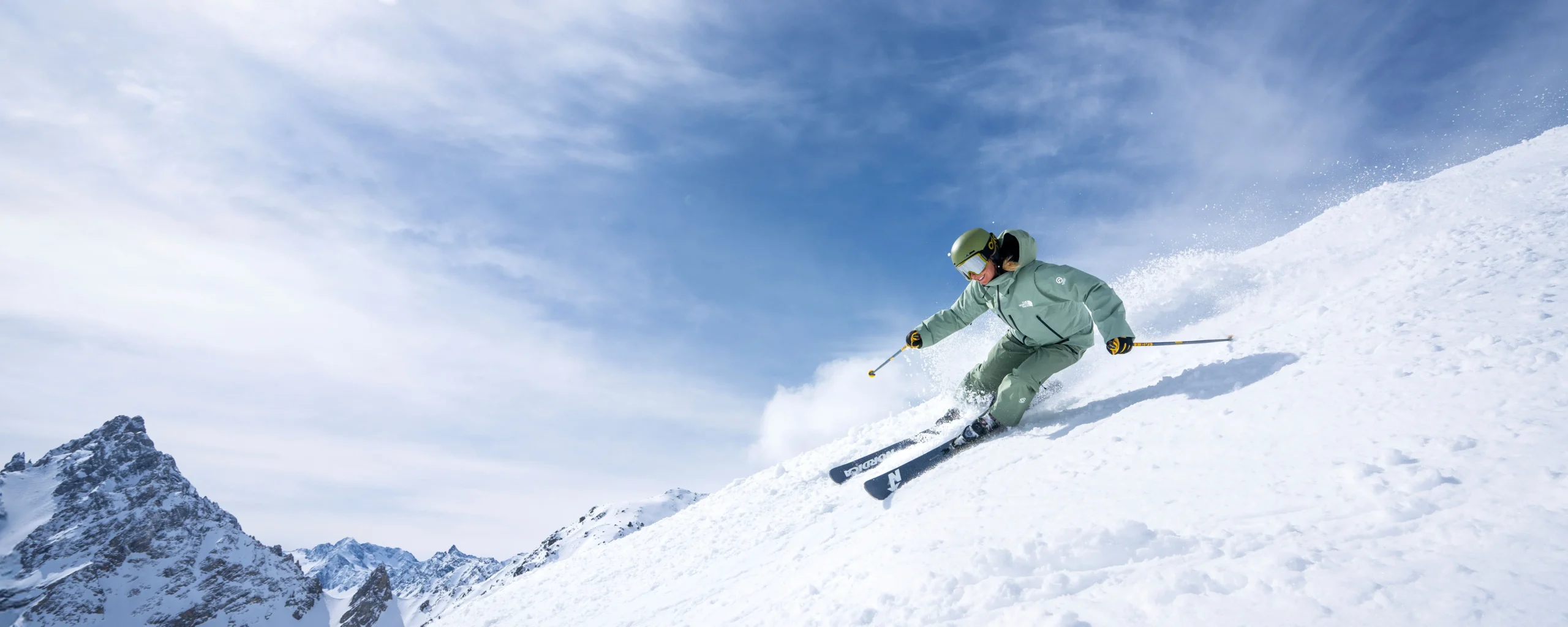
When assessing your BASI Level 2 long turns, the examiner will be looking for:
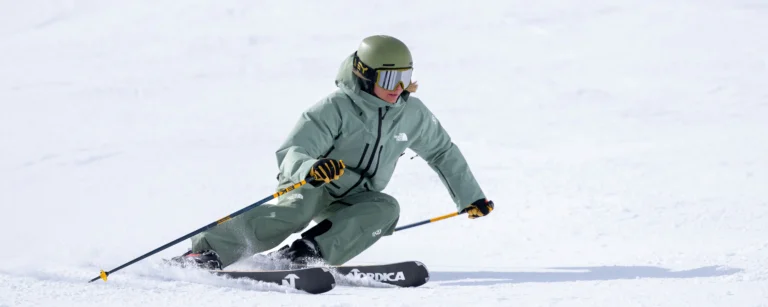
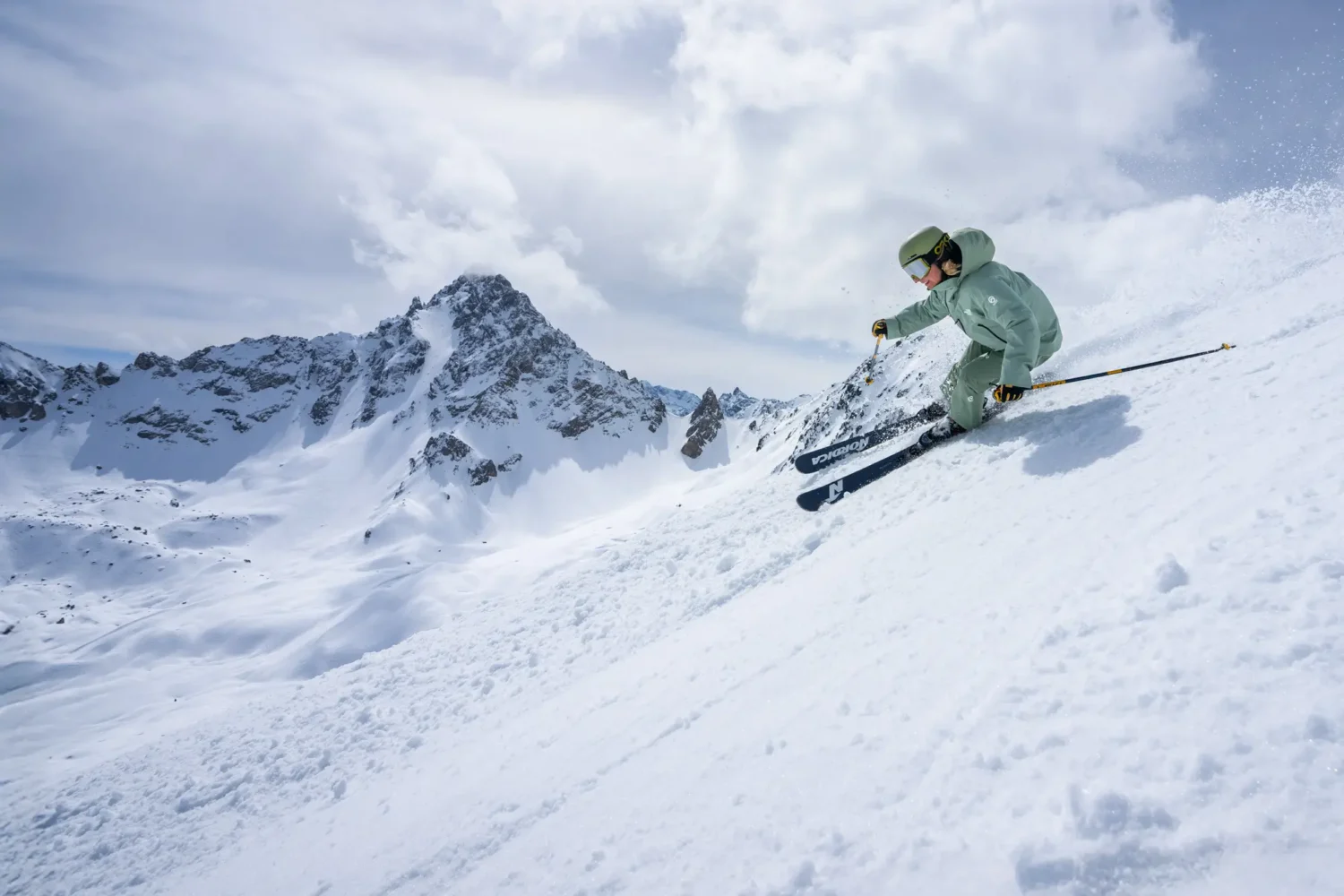
Cleanly carved turns on a blue piste – Your skis should track smoothly on their edges. This will create curved arcs with minimal skidding. The shape should be round and consistent, and leave two clean lines in the snow.
A Variety of turn radii – Show the examiner that you can control different long turn sizes. You’ll be asked to ski both sweeping arcs and slightly tighter carving turns. During which you’ll have to maintain balance and edge grip.
The use of effective posture and balance – A solid, effective stance is essential. you’ll need to show that you’re balancing over the outside ski.
Drills to improve your BASI Level 2 long turns
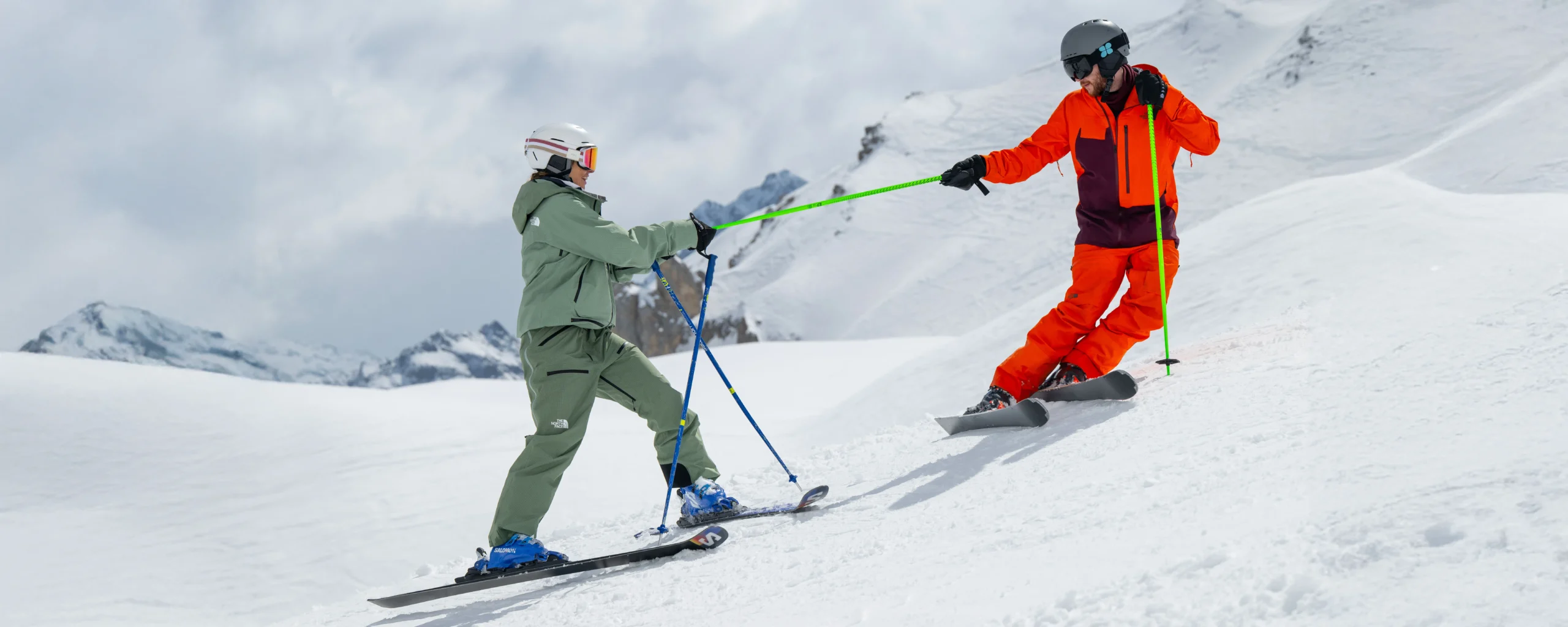
Here are some drills which will help you develop the skills needed for your BASI Level 2 long turns.
Railroad tracks
Ski down a gentle slope and gradually tilt your skis onto their edges. Don’t rotate your skis. You won’t need to apply too much outside ski pressure for this drill either.
This will let the skis run along their sidecut and create shallow turns without skidding. An indicator that you’re doing this correctly is that you’ll leave two clean, parallel lines in the snow behind you.
Benefits: This drill will help you to practise turning your skis with only edges and pressure.
Rolling your edges
On a steeper blue slope, face your skis across the fall line. Engage your edges, then release them to slide down the slope. Then, engage your edges again to grip the slope.
When you angle your edges to stop, don’t do so by pushing the skis away from your body.
All movement should originate from rolling onto the edges of your ankles and knees. Once you’ve tried it facing one side, do it facing the other side.
Benefits: This drill will help you practise engaging your edges.
Javelin turns
This drill will help you work on early outside ski pressure.
During this drill, apply pressure to your old inside ski towards the end of the turn.
Roll this ski over onto your new edge before it becomes your new outside ski.
Lift your other ski whilst keeping its tip on the snow to maintain forward pressure.
Being able to roll smoothly onto the edges of your new outside ski is an important part of great long turns.
You must be balanced over your outside ski during this drill. It’s also key to apply early pressure and maintain lateral separation.
Benefits: This drill helps prevent you from falling on your turns. It can also help with upper-body discipline and progressive angulation throughout the turn.
Technical areas to focus on
Lateral Separation
When you’re doing your BASI Level 2 long turns, you’ll need strong pressure over your outside ski.
This pressure will keep the edges engaged in the snow. If you don’t have this, your outside ski will break away. This will cause it to skid.
Good lateral separation will help you to remain balanced over your outside ski. Failing to laterally separate will mean that your mass is too far inside your turn. This will mean that you’ll have pressure on your inside ski.
Progressive transitions
Aim for early pressure on your new outside ski. Be progressive when rolling your edges onto the pressurised ski. Don’t try to dump your hip inside the turn too early. Laterally separate the most during the middle of the turn. This is when your outside ski pressure is highest.
Upper body stability
Aim for a calm upper body. Face the fall line but avoid any twisting, which will draw pressure away from your outside ski.
Tactical tips to consider
Let the skis run
If you’re new to long turns or are trying to tighten the radius of your long turns, it can be tempting to rush your turns. Try to let your skis run.
If your skis are rotating, they will not be on their edges, which is necessary for carving. You’ll have to resist the instinct to force the turn. Let the ski edge angle initiate the carve.
Control speed with the turn shape
To control your speed, you can use the shape of the turn. Hold onto the turn so the skis continue up the slope, keeping your speed lower. Release your turn earlier to maintain a higher speed.
You can also control your speed by influencing your turn radius. Each ski has a minimum turn radius. Apply strong pressure to your outside ski. This will help you to achieve the smallest possible radius. This pressure applied to the ski whilst it is on its edge will help to bend the ski and create tighter radius turns.
Get up to speed
When you’re starting your long turn run, use your poles to push off and your skis to skate to create speed. BASI Level 2 long turns are very difficult to do if you don’t have the right speed. Your examiner will also expect a constant speed throughout your run. This isn’t easy to do if you’re trying to build your speed through your turns. First, get to the speed you want to ski at, then start your turns.
Summary: What examiners expect in your BASI Level 2 long turns
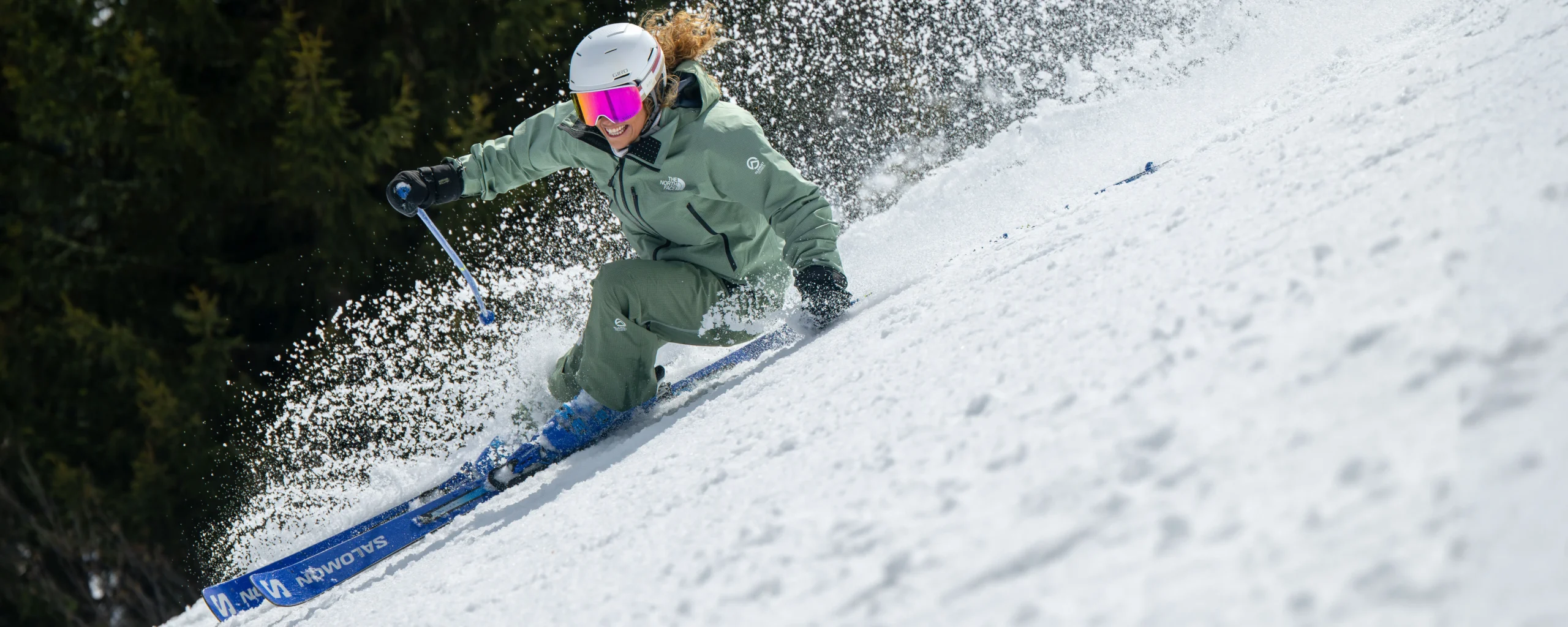
What to show to meet the criteria of BASI Level 2 Long turns.
Turn Shape – Clean, carved arcs on edge, not skidded
Turn Variety – Different radii whilst maintaining a stable speed
Body Position – Stable upper body, pressure on outside ski
Speed Control – Managed through turn shape
Overall Flow – Smooth linked turns with good rhythm