FR
FR  DE
DE 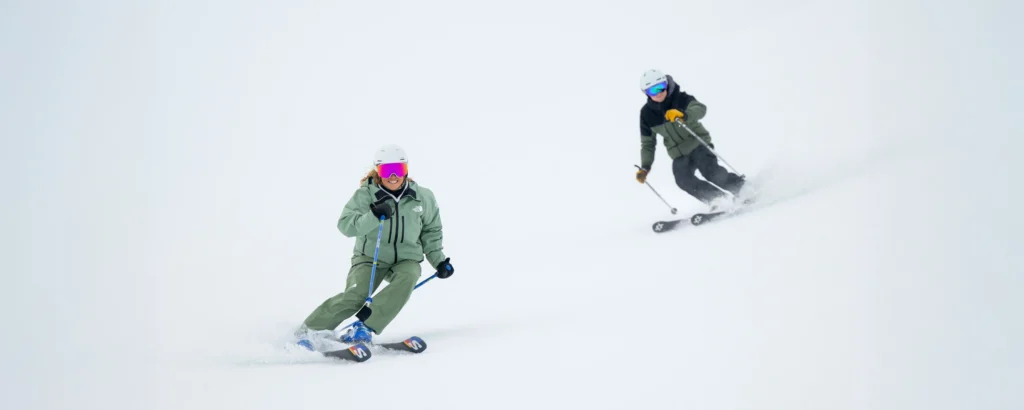
In the BASI Level 2 technical assessment, skiing steeper terrain is a key strand.
Steeps test your ability to manage speed, choose an effective line, and maintain strong fundamentals under pressure.
What are steeps?
Your BASI Level 2 steep run involves skiing a steep red piste or a groomed black piste. On these slopes, you’ll build speed quickly, so any mistakes are magnified.
In the context of your BASI Level 2 steeps, your examiner will be looking for you to:
• Perform linked turns on a steep red or black piste
• Show the ability to control speed safely
• Use effective posture and balance
During your runs, you may have feedback and prompts from the Trainer. If they ask you to do anything, it is important that you incorporate it into your skiing. Trainers will be looking to see that you’re able to change the way that you ski.
The steep strand will test you in several different ways.
- Controlling speed through the turn shape
- Choosing an effective line
- Maintaining composure, body discipline and turn rhythm.
Your skiing should still look technical sound, even when the terrain feels demanding.
Speed control in your BASI Level 2 steeps
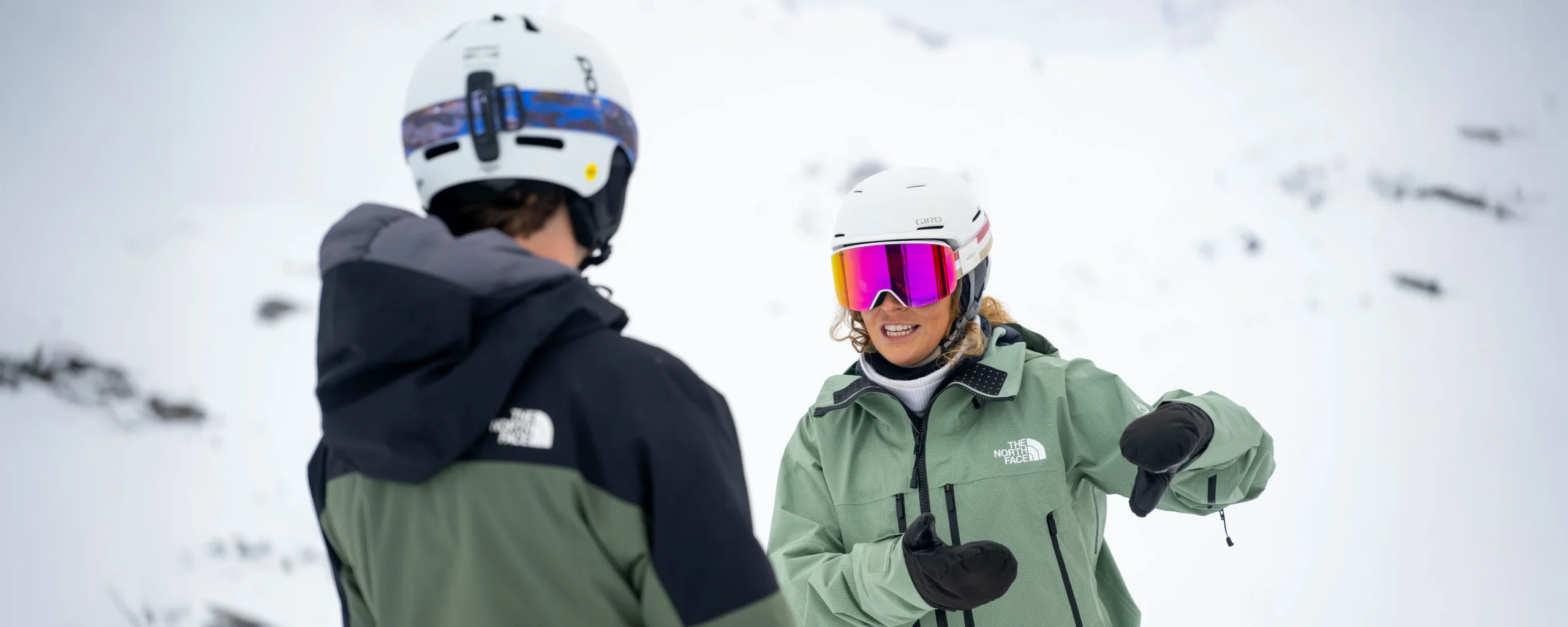
There is a lot more effort required to control your speed in steeper terrain on BASI Level 2 steeps compared to other strands.
You’ll still have to control your speed in a way which meets the examiner’s marking criteria. Speed must be controlled by:
- Turn shape
- Timing of pressure
- Direction of travel across the slope
Control speed with your turn shape, not by skidding the skis.
Excessive skidding is a common failure point on BASI Level 2 steeps. You should look to ski with grip and performance. Overly skidded turns will not deliver on either of these points.
If you find yourself going too fast, then you do have several options depending on your exact task.
- Widening your turns – Skiing in a wider corridor will allow you to bleed speed off across the fall line as you steer your skis back up the mountain. If your turns as too narrow, then you may not give yourself any room to use the ski’s sidecut to slow down.
- Stivot – Use one deliberate rotation of the skis to quickly reduce your speed. This shouldn’t be your first choice. However, it can demonstrate that you can take a single decisive action to regain control. The turns following the stivot will also be better than before. This’ll show the examiner that you can meet the level, but they may ask you to try again without the stivot.
Line choice in your BASI Level 2 steeps
The line you choose can have a massive effect on how successful you’re with your BASI Level 2 steeps.
A good choice of line will help you to:
- Control speed without panic
- Maintain rhythm
- Avoid the worst terrain.
Line strategies to consider:
- Avoid a diagonal direction – If you choose a line which involves directional change across the fall line, it will be very difficult to keep your turns symmetrical.
- Listen to others ski the line first – This will give you an idea of how hard or soft the snow is. Knowing the snow consistency will help you alter the way you ski the slope.
- Start right – You need to set the right pace when you start. Don’t start your turns going too quickly. You’ll have to focus too heavily on slowing down throughout your turns. Likewise, don’t start straight into a turn. Let your skis run slightly otherwise you’ll be building speed through your turns.
Start at a speed that you want to maintain across your run. To determine the speed you’ll need to start, look at how hard the snow is. The harder the snow, the easier it is to build speed.
Confidence in steeps
When you’re doing your BASI Level 2 steeps, being confident is important. If you’re not confident, then your technique will quickly deteriorate throughout the run. Being confidence on steeps should be shown through.
- Committing pressure early to your outside ski
- Being confident in releasing your turns and not holding on to your turns too long
- Continuing to maintain a rhythm even if you encounter a bad turn.
If you’re not skiing steeps confidently, you’ll find that pressure application on each subsequent turn gets later and later. This leads to you over-rotating your skis more with each turn to maintain control of your speed. Unfortunately, your BASI examiner will determine that you aren’t in control of your speed to the appropriate standard.
Drills to improve your BASI Level 2 steeps
Braquage
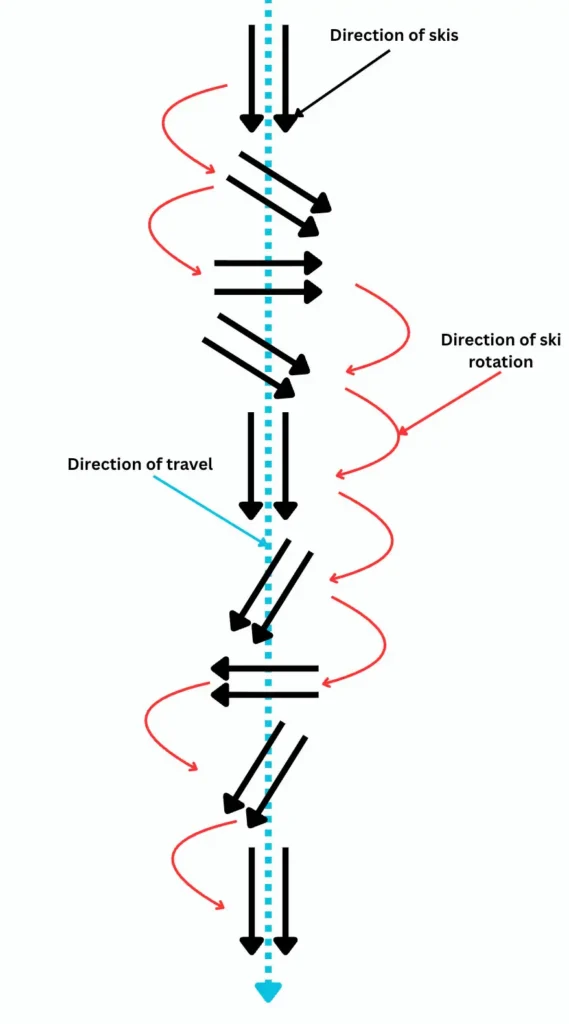
Braquage is a brilliant drill to practice ski rotation and rotational separation. These are useful skills to have for your BASI Level 2 steeps.
Better rotational separation will help you to have a smoother release from your turns. Practising ski rotation is great at helping you spread the rotation of the ski through the turn rather than dumping it all at the end of the turn. Late sudden rotation can be a common fault on BASI Level 2 steeps and will prevent you from having rounded turns.
This drill is best on a steep slope. The aim is to continue to travel directly from the fall line whilst steering your skis to rotate so that they point all the way from the left side of the piste to the right. As your skis steer under you, your upper body should continue to face down the mountain.
This drill is much more beneficial if you’ve got flat skis throughout. Building up an edge angle will cause the skis to engage and steer away from the fall line.
Benefits:
Improves rotational separation, which benefits your turn release. Improves ski rotation speed, which helps you to create rounded turns.
Javelin turns
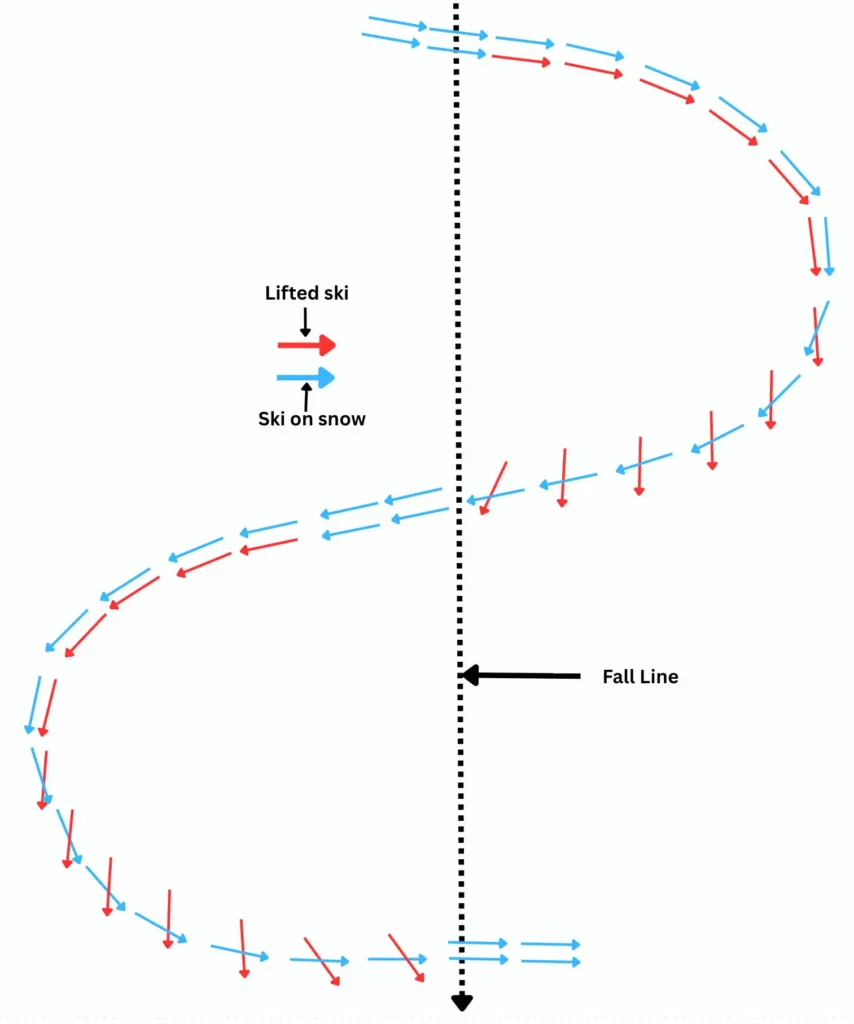
Early pressure is key to gripping the skis early on steeps. The steepness of the slope will highlight to the examiner if you aren’t standing on your outside ski before the fall line. You’ll also be more prone to skidding your turns if you don’t have this early outside pressure.
Javelin turns are a great drill to practise for early outside ski pressure.
The focus of this drill should be to have pressure on your outside ski from just after crossing the fall line. To do this, lift your inside ski. As your skis reach the fall line, keep your lifted ski pointing down the slope. As you do this, steer your outside ski underneath. As your inside ski is points down the fall line your rotational separation should keep your upper body also facing down the fall line.
Benefits:
Helps you to focus on building early pressure throughout the turn and to work on your rotational separation.
Technical focus areas – BASI Level 2 steeps
Here are the technical areas that you should aim to master before your BASI Level 2 steeps.
Pressure control
In steeps, pressure builds quickly. Ensure to:
- Apply pressure progressively.
- Early pressure on the outside ski.
Turn completion
Finishing your turns is crucial on steeps. This leads to:
- Better speed maintenance.
- A good foundation for the build phase of your next turn. Rushed transitions usually lead to loss of control.
Rotational separation
Maintain a stable upper body facing down the hill while the legs turn underneath.
Strong separation will:
- Improves turn release.
- Helps to spread the steering elements over the entire turn.
Pole plant
Having an effective pole plant is a key part of BASI Level 2 steeps.
An effective pole plant means that:
- You maintain a better rhythm and flow
- You’ll be better able to maintain upper-body discipline
- You’ve a stronger build phase of your turn
Tactical considerations – BASI Level 2 steeps
These are different tactics to consider before your BASI Level 2 steeps.
Set the right pace from the start
If you don’t have the correct speed at the start of your run, you may find that:
- Your speed runs away from you.
- You over-rotate on each turn to slow down.
- You’ve got to build speed throughout your turns, as you started too slow.
Be patient and allow the skis to come around.
Commit to the turn
As we have mentioned, you’ll only be successful skiing steep slopes if you’re committed to your turns. Stand on your outside ski early and with the appropriate pressure.
Hesitant, half-committed turns lead to:
- Late movements
- Too much inside ski pressure
- No consistent pace
Sharpen your skis
Before you even hit the slopes, make sure that you’ve got razor-sharp skis. Steeps are usually either bumpy or hard pack. On your BASI Level 2 steeps you likely won’t ski the pitch if it is bumpy as that would be under a different strand.
Blunt skis will:
- Not let you grip properly which can cause excessive skidding.
- Make it more challenging to maintain control of your speed.
- Ruin your turn shape as your skis will not want to travel across the fall line.
- Make it difficult to apply pressure to your outside ski without it breaking away.
Summary: What examiners expect in steeps
To meet the BASI Level 2 criteria when skiing steeper terrain, aim to show:
- Speed Control – Managed through turn shape, not braking
- Line Choice – Turns travelling across the slope with intent
- Body Position – Balanced, centred, and strong over the outside ski
- Confidence – Calm, committed movements without hesitation
- Flow and Rhythm – Smooth, linked turns from top to bottom
Mastering steeps isn’t about being fearless — it’s about being technically sound, tactically smart, and confidently controlled.
If you’ve got your BASI Level 2 on the horizon and you need help with your BASI Level 2 steps, we can help. Our instructor training courses are led by a team with over 20 years of experience in helping trainees achieve the BASI Level 2 standard and beyond.