FR
FR  DE
DE 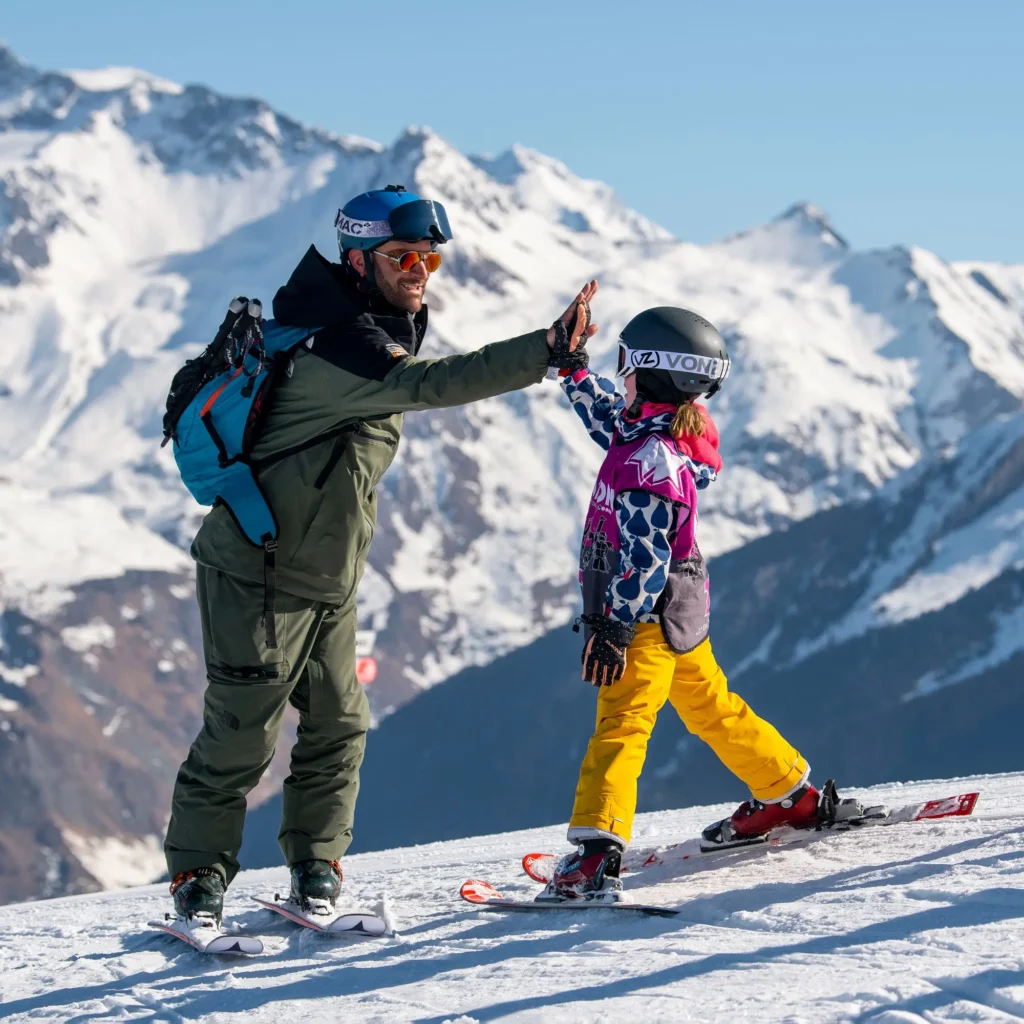
Children grow quickly, and it can sometimes be difficult to keep up with their changing needs. When it comes to skiing, choosing the right equipment isn’t just about age. You also need to consider their height, weight, and overall development.
We’ve asked our partner, White Storm ski rental, to share a few tips to help you choose the right ski equipment for your child.
At what age can children start skiing?
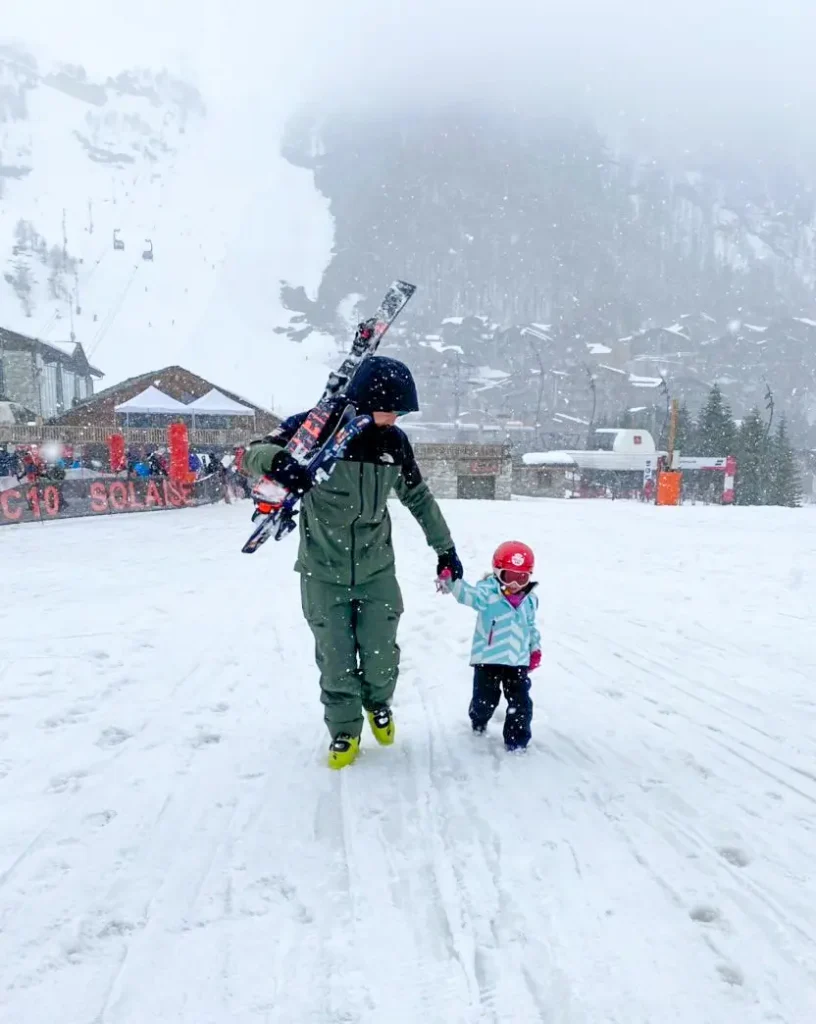
The simple answer is: as soon as they can walk.
The smallest children’s skis are about 65 cm long, and to use them comfortably, children are generally about 85 cm tall.
As for footwear, the smallest ski boots are usually Mondo size 14, which corresponds approximately to a European shoe size 28-29, UK size 7 and US toddler size 7.5. This size typically fits toddlers ages 1.5 to 2.
What length of skis does my child need?
As a general rule, children’s skis should reach their chin when standing upright.
For more advanced young skiers, slightly longer skis reaching eye level may be recommended. Longer skis provide additional stability and performance, but keep in mind that children are still developing their strength and technique.
Choosing the correct ski length helps children progress more quickly – and, most importantly, enjoy their time on the slopes.
What’s the best ski length for children?
| Ski Level | What to choose |
| Beginners | Shorter skies are much easier to run and control. Select skis that reach the child’s chest (their height minus 35-40 cm). |
| Intermediates | Opt for skis that reach between the child’s chin and nose. |
| Advanced/Experienced | Choose skis reaching the nose or eyebrows for increased stability at higher speeds. |
What material is best for children’s skis?
There are two main options:
- Foam/Synthetic cores: ideal for small beginners and toddlers because they’re light and very flexible underfoot.
- Wood cores: these are great for intermediate and advanced young skiers as they offer more edge grip, power and stability on steeper or icy terrains.
Bindings and safety
- Pre-mounted bindings: Skis that come with integrated systems are usually the best for rowing children as they offer easy adjustments.
- DIN settings: it is important always to ask a professional at a ski shop to adjust the binding release settings (DIN) using the child’s exact height, weight and skier type.
When should children switch to adult ski equipment?
The transition to adult ski equipment depends mainly on a child’s size and strength, rather than their age.
One of the first indicators is boot size: when a child reaches approximately European shoe size 39-40, adult ski boots often become a suitable option.
Adult skis generally start at around 140 cm in length, while children’s skis are available up to 150-160 cm. The main difference isn’t so much the length but the construction and weight of the skis. These impact the stability, control and physical fatigue based on the child’s size and strength.
Once a child is around 155-160 cm tall and has developed enough strength and weight, it may be appropriate to move on to adult ski equipment. Of course, this will also depend on ski technique, safety thresholds and mechanical limits.
- The safety indicator: DIN and Binding Compatibility
This is the most critical safety factor, as junior bindings are designed around different mechanical limits:
- The “out-grown’ DIN setting: Junior bindings typically top out at a release value (DIN) of 4.5 to 7. If a teenager’s aggressive skiing style, increasing weight, or speed requires a DIN setting of 5 or higher, they must switch to an adult binding system to ensure the skis release safely during a crash.
- Boot Sole Compatibility: Junior boot soles have a thinner, shorter profile than adult. Once a child’s foot grows to Mondo size 22 to 23, they transition to an adult boot standard.
- The technique indicator: Ski Flexion vs Over-Flexing
- Over-Flexing: If an advanced junior skier applies force to a junior ski and the ski “washes out,” folds completely under pressure, or chatters excessively at speed, they have overpowered the gear.
- The transition point: A junior ski becomes ineffective when the child is actively trying to drive an edge, but the soft junior core can’t transfer that power to the snow. They must move to an adult ski construction to get the necessary stability, torsional rigidity, and edge grip.
- The weight threshold
- The 45-50 kg rule: Most companies design junior skis for skiers weighing under 45-50 kg. If a child crosses the weight threshold, they can move to adult skis.
Questions about Ski Rental?
At White Storm Ski Rental, their experienced team will be happy to help you determine the ideal ski equipment for your child. Even if you select the wrong package when booking online, they’ll make sure your child leaves the shop with the right skis, boots, and equipment for their ability level and size.
Book your equipment online, and if you’re looking for children’s ski lessons this winter, contact our team to find out more.